Ocean-Friendly Sourcing
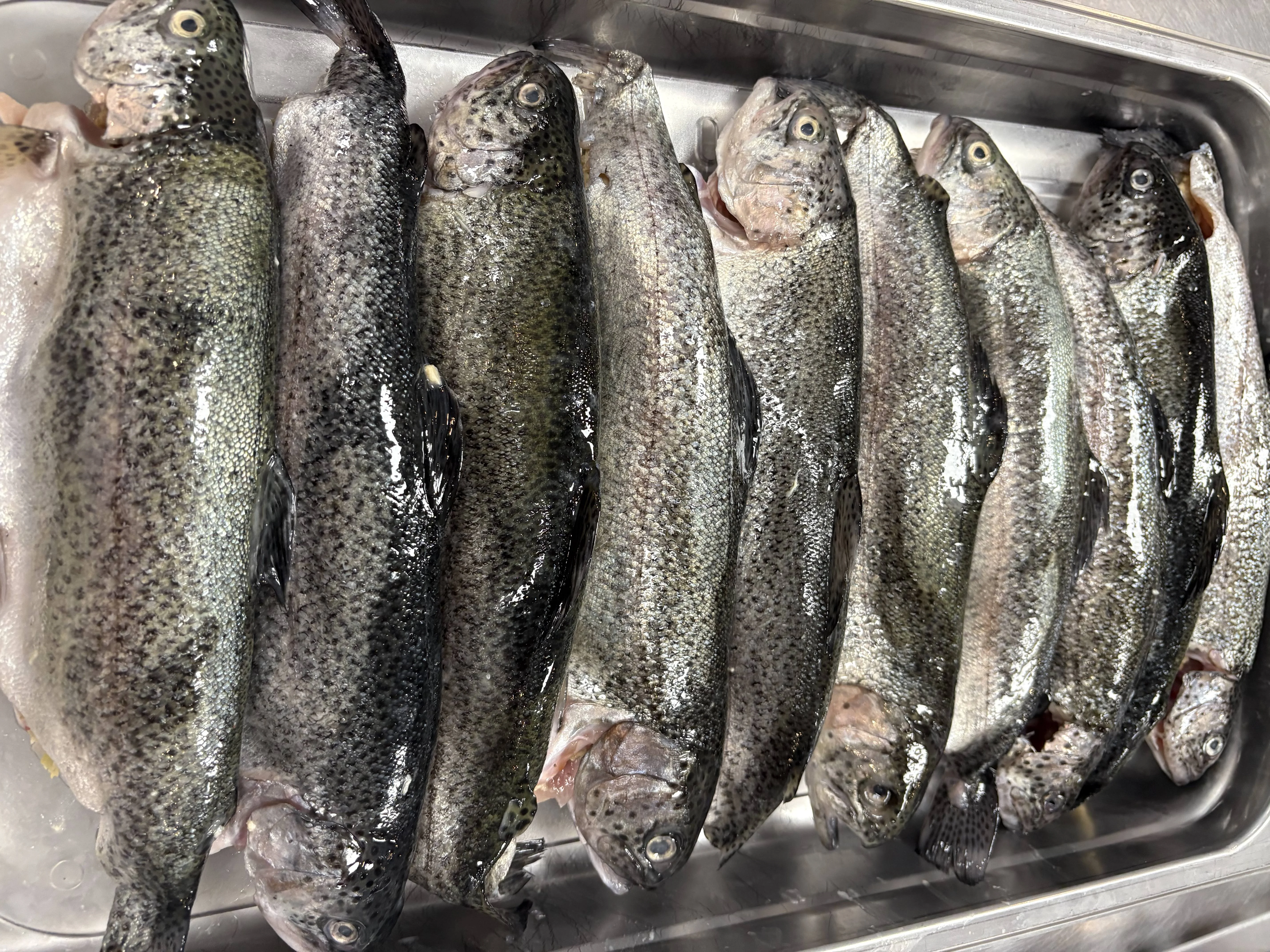
We partner with sustainable fisheries and local suppliers who share our commitment to protecting marine ecosystems for future generations.
Science & Sustainability
We use Super Freezing (-76°F) to preserve seafood at peak freshness without additives.
When the right product is frozen for the right reasons with the right technology, frozen seafood can outperform never-frozen seafood.
The Benefits of Super Freezing:
Texture When Seafood is super frozen the cells structure remains relatively unchanged. All water in the cells is frozen, bringing the microbial decomposition to a standstill. Versus, in a low quality freezer the water molecules migrate to the surface negatively impacting the quality of the texture, potentially resulting in soft or mushy product.
Freshness:
When Super frozen product is thawed it is in the same state of freshness and texture as it was the moment it was frozen.
Chemical Free
Chemicals such as carbon monoxide for color retention are not needed in this process.
Tri-Polyphosate and Shrimp
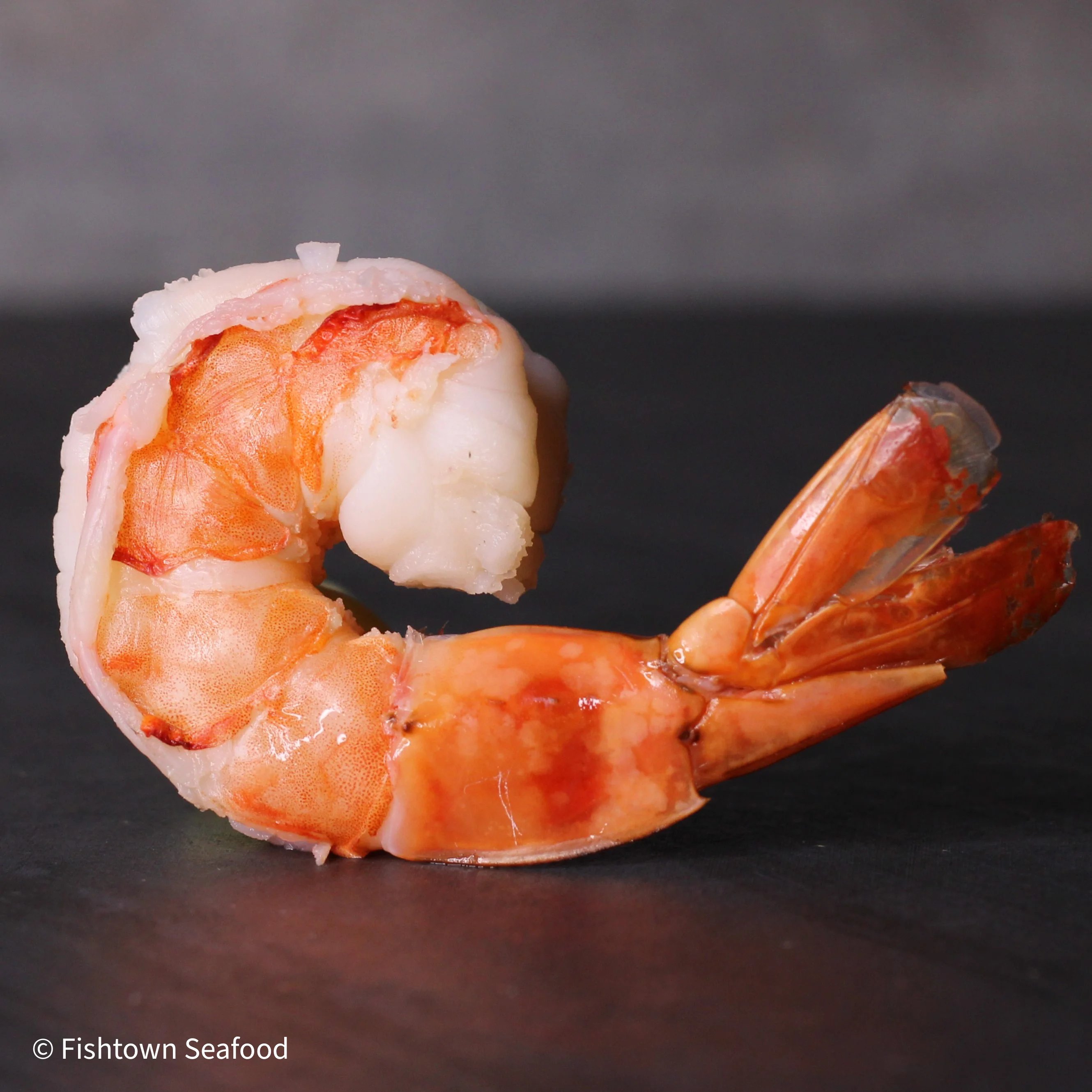
When shrimp is treated with Tri Poly Phosphate it can have over 20% of added moisture. When it’s treated with salt it can have up to 15% of added moisture.
Q: Why Does Added Moisture Matter?
A: Because shrimp is sized by weight, so when you buy shrimp with added chemicals you are overpaying for lower quality shrimp.
Q: Do you have fresh shrimp?
A: All of our shrimp is frozen and can be thawed in a cold water bath quickly to ready for cooking. We find this keeps your seafood as fresh as possible till you are ready to consume it.
Sustainability and Seafood
Only 18% of the animal proteins we consume globally is seafood. Of that 18% 9% is farm raised is 9% or wild.
Of the farm raised over 5% as farmed raised is in freshwater like tilapia that is farm raised in China. So less than 4% of all of the animal proteins that we consume globally, comes from farm raised seafood in the ocean.
The surface is 70% water and for the remaining 82% of proteins that are land based we share that 30% of global surface of land with farm raised animals infrastructure agriculture all of these things. The best thing that we can do environmentally is be eating more farm raised seafood.
Sustainability is making a comeback.
Here’s some good news: in 2019, 82.5% of global fish landings came from biologically sustainable stocks—a 3.8% improvement since 2017. Effective management is helping fish populations recover, proving we can balance conservation with a thriving seafood industry.
Rebuilding fish stocks could be a game-changer.
If we focus on restoring overfished stocks, we could increase global seafood production by 16.5 million tonnes. That’s a huge boost for food security and coastal economies while ensuring healthier oceans for future generations.
Fewer fishing boats, smarter practices.
The global fishing fleet has gotten smaller—there were 10% fewer vessels in 2020 compared to 2015. This shift reflects a move toward more efficient and sustainable fishing methods, showing progress in how we manage our oceans.
Women are essential to seafood.
Of the 58.5 million people working in fisheries and aquaculture in 2020, 21% were women. Their contributions are often overlooked, but they’re crucial to the industry’s success, from processing plants to leadership roles.
We’re making the most of our catch.
By 2020, 89% of global seafood production was used for direct human consumption, compared to just 67% in the 1960s. That’s a huge leap in reducing waste and ensuring more people benefit from our oceans’ bounty.
By-products are reducing waste.
Over 27% of fishmeal and 48% of fish oil now come from by-products like fish heads and bones. This means we’re using more of each catch, which is great for efficiency and sustainability.
Wild vs Farmed Fish
Yes, there are some farms that are not doing the best job. But in general farmed seafood has come a long way, particularly farm raised salmon. We source our King Salmon from farms in New Zealand and British Columbia. All are rated Green on Monterey Bay Aquarium’s Seafood Watch program which designated it as a “best choice” rating for seafood that is sustainably caught or farmed with low environmental risk. These options are highly managed, environmentally responsible, and often part of a "Super Green" list that is also low in mercury and high in Omega-3s.
It takes a wild king salmon 7 pounds of fish consumed to make 1 pound of salmon. Our feed conversion ratio on our farm raised fish is less than two. So there is a net gain in consuming farm King salmon versus wild.
Furthermore, there are only about 1 million wild king salmon caught every year in Alaska. We actually don’t support the consumption of wild king salmon. As it is a species that is very depressed and between freshwater habitats fishing the loss of genetics over the last 200 years due to what humans have done for fishing as well as dams, and other land based environmental issues we don’t think eating wild salmon is a responsible choice and therefore we don’t do it.
The Truth About Salmon Color:
What You Need to Know
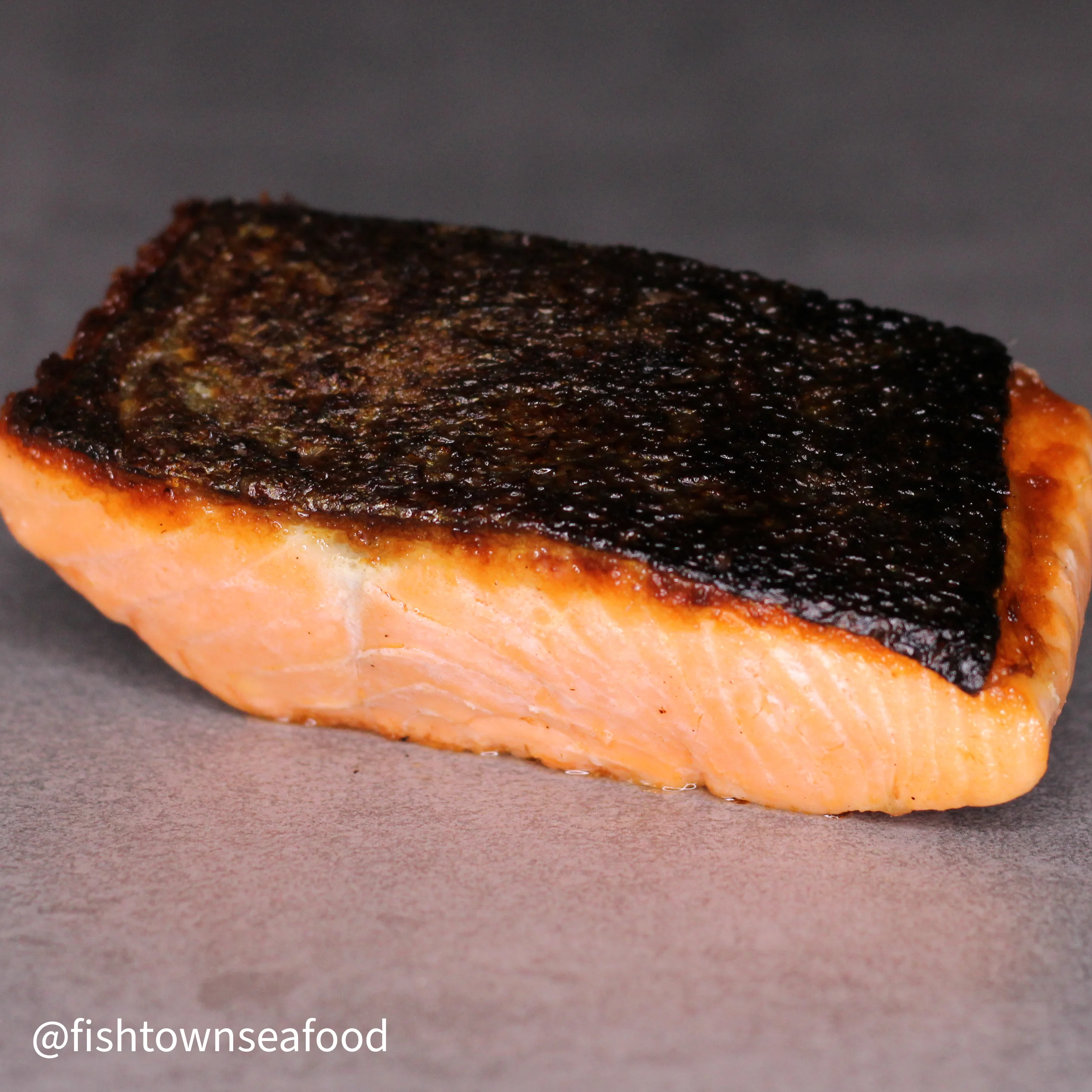
Ever wondered why farm-raised salmon, Arctic char, and steelhead have that vibrant pinkish-orange hue? It’s no accident—there’s fascinating science behind it. Let’s dive in and debunk some myths.
The Role of Astaxanthin
Farm-raised salmon don’t naturally have the vibrant color of their wild counterparts. Their feed includes Astaxanthin, a pigment that not only gives them their pink hue but also provides vital health benefits. This powerful antioxidant supports the fish’s immune system, fertility, and overall well-being.
Astaxanthin comes in two forms:
•Natural Astaxanthin, derived from algae or yeast, is also prized in pharmaceuticals and cosmetics.
•Synthetic Astaxanthin, more affordable and commonly used in farmed fish, egg-laying hens’ diets, and ornamental fish feed.
Myths vs. Facts
MYTH: Salmon are dyed pink or orange by painting or injecting color into their flesh.
FACT: Absolutely not. The pinkish hue comes from the Astaxanthin in their diet, not external dyes.
Astaxanthin doesn’t just color fish—it’s also used in feed for egg-laying hens, enhancing yolk color while boosting hens’ health.
Why Not Go All-Natural?
Natural Astaxanthin is significantly more expensive—600% more than the synthetic version. While this might seem prohibitive, the global market for synthetic Astaxanthin is under $2 million annually, with aquaculture feed accounting for less than half. Transitioning to natural Astaxanthin wouldn’t drastically raise costs for the seafood industry.
However, scaling up natural Astaxanthin production to meet demand remains a challenge. Overcoming this hurdle could eliminate debates about “added color” in farmed seafood and set a new sustainability standard.
A Hope for the Future
Adopting natural Astaxanthin globally could boost the image of farm-raised seafood while aligning with sustainability goals. It’s time for industry leaders to make this vision a reality.
So, next time you see a pink piece of salmon, remember: that color is a result of science and nutrition, not a paint job.

